Developer Networks
Build with GraphicStream technologies
GraphicStream library of technical articles, tutorials, and learning resources
GraphicStream is a software publisher and the publisher of Immersive. The Developer Network supports teams building with its products and technologies.
Get started
Essential resources
A curated selection for understanding the GraphicStream ecosystem and starting to build around Immersive.

Presentation of the Beholder interface
Quickly get your bearings in the Beholder by discovering how the screen is organized between 3D view, equipment list, alarms and menus. This chapter shows where to act, what to look for, and how to select equipment from both the digital twin and the side panels. You will immediately understand the meaning of the color codes and visual indicators to spot a defect, a disconnection or equipment under construction without wasting time. It also explains the role of 3D widgets, graphical objects, and annotations to read the field context more accurately. By the end, you'll be able to navigate the application smoothly and interpret the overall status of a fleet of equipment at a glance.
Read the resource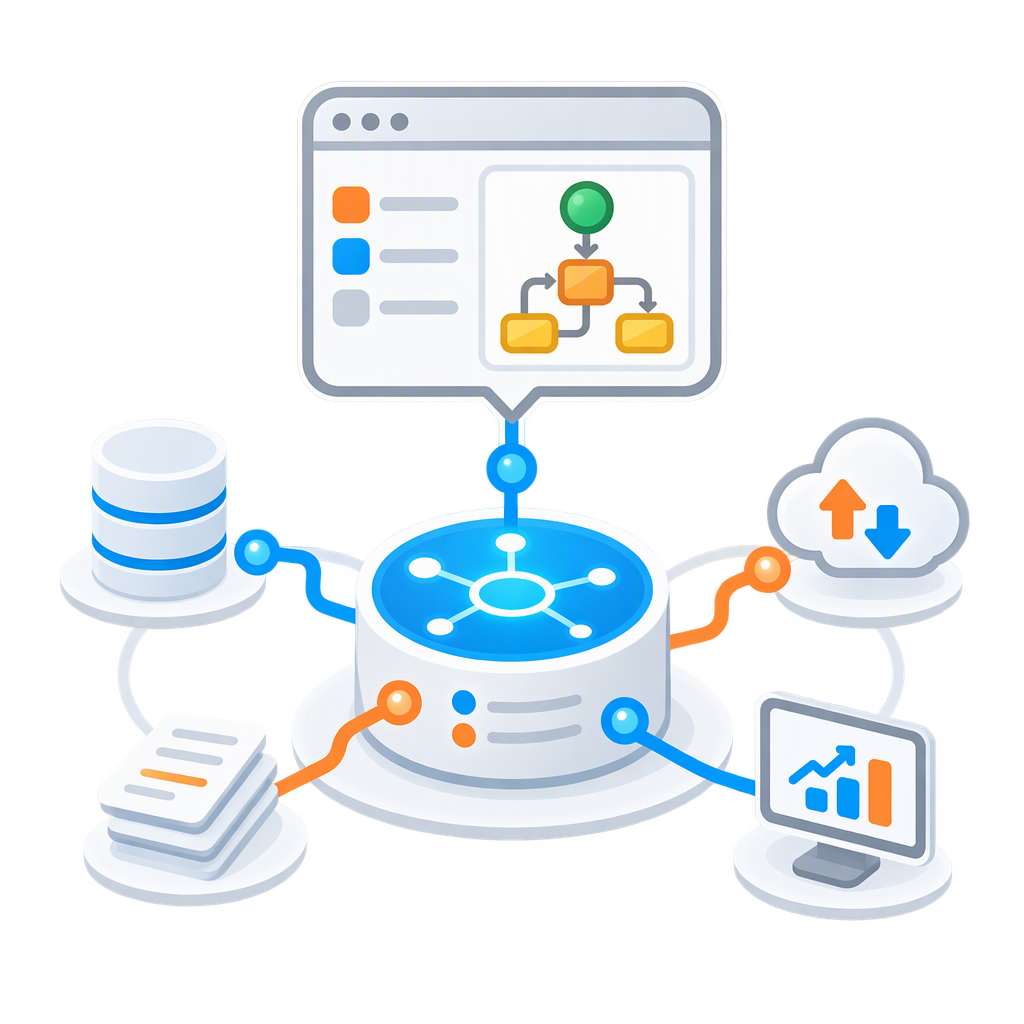
Hub: Overview
Understand in a few minutes how the Immersive Hub orchestrates data access between your applications and heterogeneous sources such as OPC UA, Excel, MQTT or SQL. This presentation shows concretely how the same mechanism unifies requests, updates and quality statuses, without exposing the complexity of the protocols. You will see the precise role of handles, sessions and connectors, and how the Hub distributes the right values to the right consumers at the right time. By reading, you will be able to model access to data, follow the life cycle of a session and understand how to connect or design a connector adapted to your needs. You will also be able to interpret error states, timeouts and fault reports to make monitoring and maintenance more reliable.
Read the resource
Binding: Introduction
Cette introduction vous montre comment relier proprement un objet de la scène 3D à un équipement métier Immersive, pour que données, états, alarmes et interactions pointent toujours vers la bonne cible. Vous comprendrez la logique du modèle objet, des familles, des instances, des handles et des scopes, sans rester au niveau théorique. La formation s’appuie sur un cas concret, BuildingSensorSimulator, pour apprendre à identifier les équipements à créer et à structurer un contrat de données fiable. À la lecture, vous saurez préparer un binding stable entre vue 3D et DOM, éviter les mappings fragiles et concevoir une base exploitable pour le scripting, l’UI et la supervision. C’est le point de départ indispensable pour bâtir un jumeau numérique cohérent, évolutif et fidèle au terrain.
Read the resourceExplore
Browse GSDN domains
Each shelving groups documents, guides and references for a single functional or technical domain.

Forge
Forge is the **integrated creation** environment of the Immersive platform. Designed for developers, integrators, merchants and trainers, Forge allows you to create, customize and deploy experiences for Immersive adapted to a multitude of use cases.
16 documentsBinding
Binding concepts and guides.
1 documentArticles
Technical articles and transversal topics.
1 documentCommons
Common setup and shared fundamentals.
0 documentsConnaissances de base
Explore the guides, references and examples for this domain.
2 documentsHub
The Immersive Hub is the heart of the Immersive solution's data infrastructure. It is the universal intermediary between: * Data sources: IoT sensors, PLCs (OPC UA, Modbus, MQTT, etc.), Excel files, SQL databases, REST APIs, etc. * Consumers: Beholder 3D applications, supervisors, web synoptics, or any other business service. The Hub acts as an **conductor**: It centralizes heterogeneous data from multiple protocols, synchronizes useful values with client applications in real time, and ensures consistency and reliability of information for monitoring and maintenance.
5 documents
Rest Frontage
y
21 documents
Scripting
Learn how to bring your plan to life by reacting to the data received and offering an interface tailored to the needs of your users.
16 documentsDiscover
Continue exploring
Resources selected at random from the library to reveal more possibilities offered by Immersive and GraphicStream technologies.

Service
This module shows how to enrich a Forge map by assigning a service to an element to give it a clear role in the operation of the site. You will learn how to open the editing mode of the services, choose the right service and assign it to an area, a structure, a model or a waypoint. The document also explains how to add a visual bubble to make points of interest and technical functions immediately readable. By the end, you will be able to structure your map data in a way that is useful for supervision, navigation and functional analysis. You will also understand why this layer of information becomes essential to effectively connect the map to other Immersive modules.
Discover
The Recovery Console
Understanding the Recovery console means knowing how to intervene when a service needs to be restored, verified or refurbished without improvisation. This document explains its role in the architecture, the prerequisites to be met and the points of vigilance to be aware of before any manipulation. You will find a concrete process to prepare the environment, configure the solution and succeed in a simple first case with a clearly identifiable expected result. The training also helps to identify common errors, diagnose a malfunction and adopt best practices to secure your operations. At the end, you will know in which cases to use the Recovery console, how to integrate it into your business context and how to validate that an intervention has indeed produced the expected effect.
Discover
Secure object permissions and rights
This document explains precisely how the server decides whether a user can act on a given business object. You will understand the role of each brick of the model — secure object, permission, right, group, share — and how allowed and denied flags are evaluated. It also shows why a denial wins, how nested groups influence the result, and what a mask like '0x13' or '0xFFFFFF' really implies. By reading, you will be able to diagnose denied access, define consistent permissions for a type of object and avoid the classic mistakes when evolving the security catalog. Finally, you will have concrete examples on maps, world views, devices, workspaces and folders to link theory to real administration cases.
Discover
Scripting: Geolocation
This tutorial shows how to use the GPS data of a device to display it and make it evolve automatically in the 3D digital twin, without writing JavaScript. You will understand when to use GeoTracking, GeoMove or NavMeshMove depending on the accuracy of the positions, the frequency of ascent and the type of movement expected. The document also details the exact configuration to be planned for variables, from the format 'longitude; latitude' to orientation or reverse fields. When you read it, you will be able to choose the right native behavior, avoid the pitfalls associated with WGS 84 and obtain consistent visual tracking, from a simple teleport to a fluid animation on a navigation graph.
DiscoverNO ICONContains: Behaviors, Scripting
Ce tutoriel montre comment prendre la main sur le comportement du Beholder sans imposer de mise à jour aux utilisateurs. Vous y apprendrez à créer des Workspaces et des Controllers, à publier des versions de scripts et à les associer précisément aux bons équipements. Il explique aussi les différences entre scripts de paramétrage, scripts applicatifs, scripts d’équipements et contrôleurs de traduction. À la lecture, vous saurez adapter l’interface, réagir aux données réseau, cibler une famille d’équipements ou un simple handle, et activer le bon script dans le bon contexte. Une base concrète pour faire évoluer rapidement votre application, avec méthode et sans bricolage.
Discover